Culture Through a Child’s Curiosity: Maria and Little Nińo
Culture is learned and passed down from generation to generation. Understanding culture is essential for making sense of human behavior and social life. Culture provides the context that explains why people in different societies act the way they do. And what’s more beautiful and a better way to share culture when sharing this with a curious child?
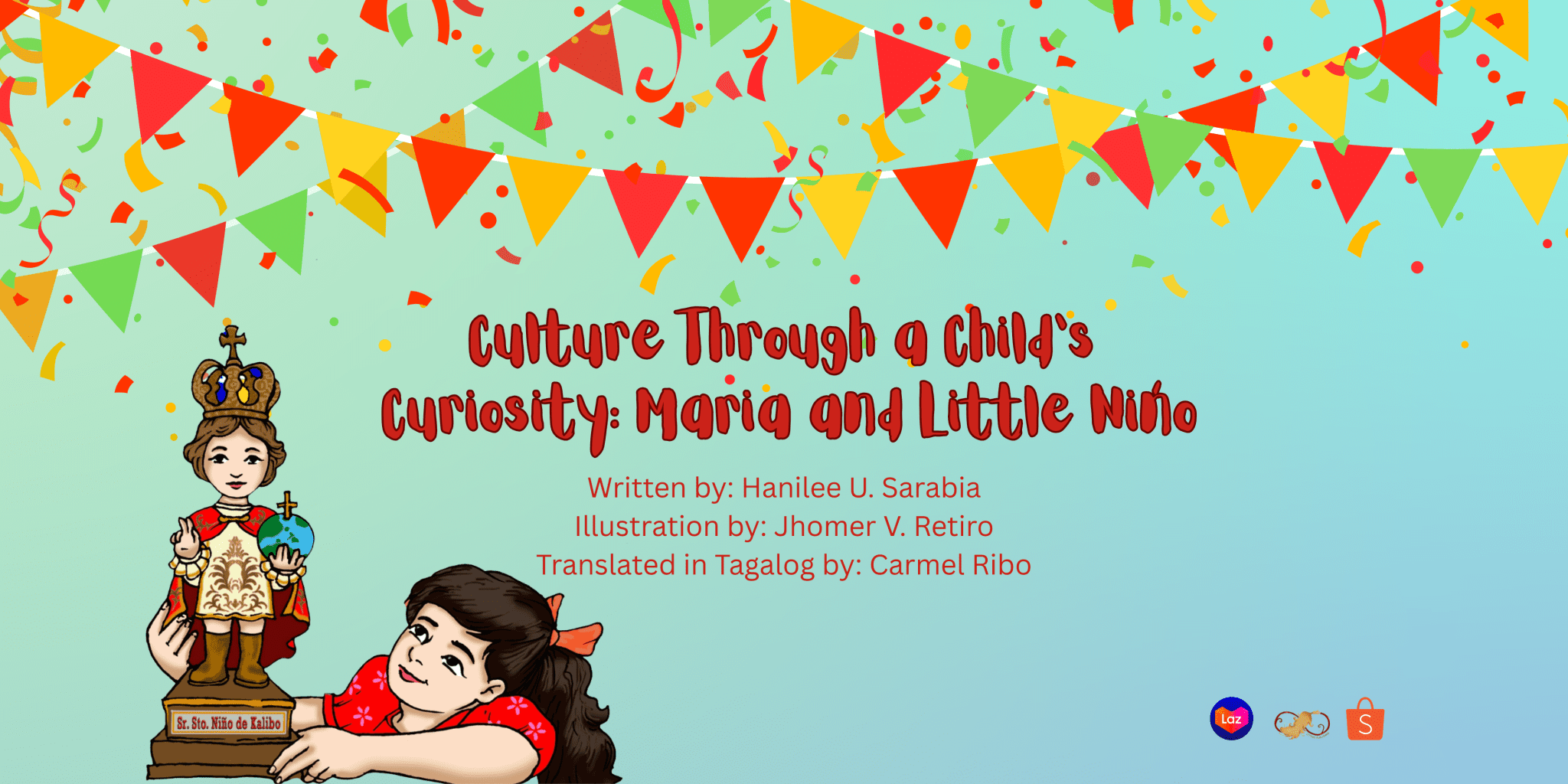
A touching tale of culture, curiosity, and love, “Maria and Little Nińo” reminds us that some bonds— like faith and family— live on through celebration of culture and traditions, memory, and the beat of a drum. This is a book written by Hanilee U. Sarabia, translated by Carmel Ribo, and illustrated by Jhomer V. Retiro.
“What really inspired me is that I wanted to leave something to my child and for every child too that will outlive me. The story was crafted last 2024 and the plot was entirely different actually until something happened to me. It was a sad thing that I had to go through. As part of the memory that I wanted to cherish, I made a story out of it,” Hanilee Sarabia stated.
BALANCING EXCITEMENT WITH RESPECT
According to Sarabia, “The balance comes from telling the story through a child’s eyes while maintaining the details of respect for the festival’s cultural and religious significance to Akeanons.”
“The story focuses on Maria’s curiosity— her sense of wonder of the festival. Seeing the festival through a child’s eye makes it relatable for children. Maria’s father answers her questions with details that are child-friendly— focusing on the festival’s essence that is rooted from unity and shared celebration,” she added.
THE SIGNIFICANCE OF CHOOSING THE PERFECT ILLUSTRATOR
The illustrations of the book Maria and Little Nińo are definitely a big part of bringing the festival’s energy to life. According to Sarabia, “My illustrator is an Akeanon, so it wasn’t hard for me to collaborate on how I would want the illustrations to look like. Since he is an Akeanon too, being native to the locality, he had an authentic and firsthand experience of the Ati-Atihan festival for so many years. So I just trusted him on how he depicted the story through illustrations,” Sarabia said.
THE STORY OF PEOPLE BEHIND THE CHARACTERS
“The main character in the story, Maria is actually what my daughter is like. She is very inquisitive and observant to her surroundings. Maybe it’s a natural thing at her tender age of 3 that she has this somewhat photographic memory and endless ‘whys’. So it’s like, I simply made a story for her to remember how she was during her early childhood years. And since I had a miscarriage a year ago and knowing how Maria wanted to have a little brother, I thought of naming his unborn sibling as Nińo and I knew it would be easier for her to understand the loss in a way that I know better as a mother,” she shared.
TO THE CHILDREN
“I hope that the children will appreciate not just the festival that is celebrated with colorful costumes and loud chanting, but the cultural and shared traditions the festival is all about. Maria’s curiosity shows the festivals through the eyes of a child, and emphasizes that it is okay for children to ask questions as they show their sense of wonder as the story of the festival unfolds,” Sarabia said.
WHAT I HOPE THIS BOOK WOULD ACHIEVE
“On a personal level, I hope the book provides a connection between the festival and the values that I hope the story brings— faith, cultural pride, and family. Through the story, I want to honor the festival and how it can be viewed in the curious eyes of a child like Maria; that if curiosity meets patience and sense of wonder, a child like Maria can appreciate and enjoy the richness of the festival’s history. Professionally, I hope the book establishes my voice, being a beginner in this field as a storyteller, who writes stories that aim to spark interest both of the children and adults while illuminating the rich history of one’s community. It would warm my heart if the book finds its way to the shelves of libraries and at home,” the author finally said.
In Maria and Little Nińo, Hanilee U. Sarabia doesn’t just tell a story— she crafts it from real life moments and experiences. The Ati-Atihan festival was really captured, from its vibrant colors, costumes, and the lively atmosphere with the realistic illustrations of Jhomer V. Retiro. This book reminds us that Ati-Atihan is a celebration of heritage that promotes peace and friendships. Its beliefs are embodied in the image of the Sto. Nińo, reminding us—like the spirit of every child—to keep innocence and faith alive within us.