
THE BOY WHO TURNED FOUR EVER: Q&A WITH THE AUTHOR
What if your wish came true?
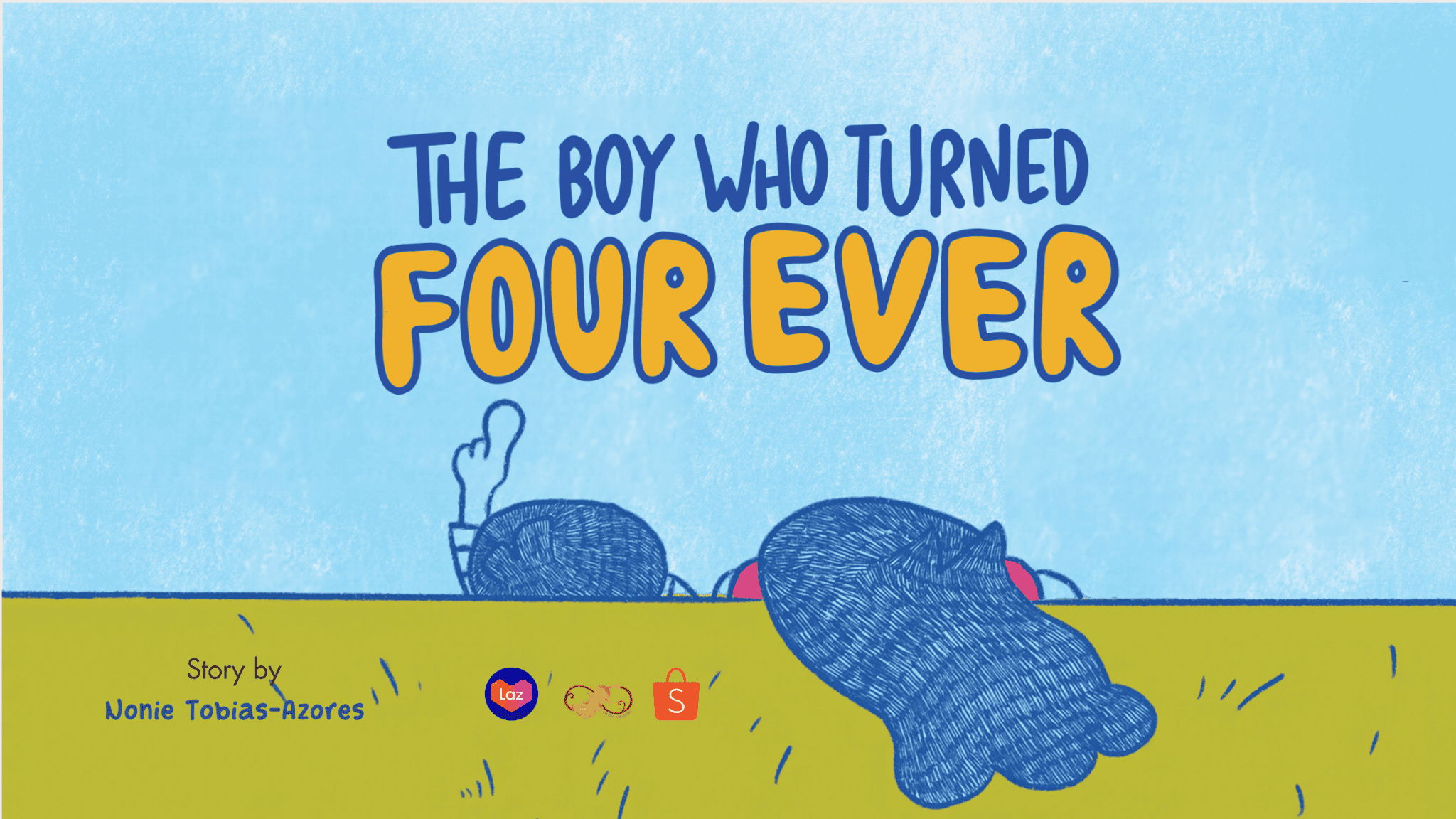
A mother wishes to see the face of a loved one who is gone—the bright, four-year-old smile of her son, now growing up and slipping away. But what happens when that wish doesn’t fade? What if he stayed four… forever?
The Boy Who Turned Four Ever is a beautifully written children’s story that wraps a truth inside a simple question: Is it truly love if we stop time just to keep someone close? A story that speaks to children and adults alike, reminding us that love is also about letting go and cherishing every moment as exactly as it is.
Here are the author’s thoughts behind the pages:
What inspired you to write a story about a mother wishing to see her child’s younger self, and what made you settle on the age of four specifically?
I have two sons, five years apart, who, in my eyes, are growing up way too fast. This is particularly true of my teenage son, who’s just a year shy of being legally an adult.
When he was 14, I remember witnessing him change so much, both physically and emotionally, in such a short span of time that I could hardly keep up. Every day brought something new: more body hair, a little more height, a little smellier, a deeper voice, and an increasingly sulky disposition. And with every change, I found myself wishing I could pinch his chubby cheeks, hold his pudgy little hand, or fix his apple-cut hair again.
The image of him as a four-year-old is the one most deeply ingrained in my mind. It’s also the age at which both my kids claim to have their earliest childhood memories.
And, as a writer, I thought the ages four and fourteen had an interesting dynamic. There’s a certain tension and cadence to those numbers, too. Fourteen is almost the opposite of four, yet they’re both stages of childhood that I can vividly remember. That contrast felt like a good starting point for a story.
Where did your core concept come from, the idea of a child turning four ever? Was there a personal moment or memory that sparked this?
I read somewhere that our children spend only about 900-plus weekends as kids. Not even a thousand! I also used to count how many years I had left before my children become fully fledged adults and eventually leave the family home. As if I needed another reason to be sentimental about my kids growing up.
Maybe because these thoughts were always on my mind, I literally dreamed the story into life.
In my dream, my eldest son shrank back into the four-year-old version of himself. At a family gathering, my stubborn teenage son and I had a little disagreement, and he walked out of the scene. Suddenly, a little hand tugged at mine from behind. When I turned around, it was my four-year-old son, looking up at me with his big, earnest eyes, just like in the book.
I remember waking up with tears in my eyes because I really missed that innocent little face.
The dream stayed with me, and I couldn’t help but wonder what it would be like if that actually happened. What if, instead of simply wishing we could turn back time, we were given the chance to do so? And what if we got exactly what we wished for, but not necessarily in the way we expected?
What was it like writing from a mother’s perspective? Did you find yourself drawing from your own experience or observations?
I think it’s a common sentiment among parents, especially moms, to feel a little sentimental about their kids growing up too fast. It’s a rich ground for storytelling because, as much as we want our children to grow, there’s also a part of us that wishes they could stay just a bit longer.
But I wanted to explore that familiar feeling from a different angle. My dream was literally the inspiration for The Boy Who Turned Four Ever, so I took a relatable parental sentiment and gave it a bit of a fantasy spin. I turned a “what if” into reality.
I think that’s one of the interesting things about storytelling: you can take an emotion or experience that many people share and explore it in a way that wouldn’t be possible in real life. In this case, I wanted to go beyond the wish itself and imagine what might happen if it actually came true.
How did you approach writing a story that deals with the passage of time in a way that both children and adults can understand and connect with?
It was important to communicate the change in time through both the storytelling and the illustrations.
I discussed the visual treatment with the book’s artists—my son, Anton, and my good friend, Bleps. We wanted the present-day reality and the dream of going back in time to feel distinct from each other visually, so readers could easily follow the shift between the two.
As for the text, my writing has always been quite descriptive, so that style lent itself well to portraying the main character’s fourteen-year-old and four-year-old versions. I wanted readers to see the contrast between the two, not just in how he looked, but also in the little details that make us remember our children at different stages of their lives.
Sometimes, it’s those little details that we remember most vividly, even long after our children have outgrown them.
It asks a quiet question: What would happen if our wish to keep things the way we want to, can actually come true? What do you want readers to realize about time and growing up through this story?
We’ve all heard moms say they wish their kids were little again, but I wanted to explore what would actually happen if that wish came true.
If the universe gave me a second chance to see my children at their younger ages, I think I’d want to do the things I used to do with them, but with much more intention and a greater awareness that these moments are fleeting. I’d probably pay more attention to the little things, knowing just how quickly they’d pass.
Of course, at the back of my mind, I’d know that this second chance wouldn’t last forever. And I guess that’s precisely what would make those moments even more precious.
Maybe that’s the thing about time: we can’t stop it from moving forward, but we can choose to be more present while we’re in it. We may not always appreciate every stage of our children’s lives while we’re going through it, but we can learn to recognize that even the ordinary moments are worth holding on to.
What do you think makes this story stand out from other children’s books about family and growing up?
Honestly, my goal wasn’t necessarily to make this children’s book stand out from the rest. I simply wanted to share a story inspired by something I’ve experienced as a mother, in the hope that other families would find something familiar and relatable in it, too.
But if there’s one thing that makes this book particularly special to me, it’s the collaboration behind it: a mother and son working together as the author and illustrator, respectively.
I write for a living, and Anton has wanted to become a professional illustrator since he was little. So I thought, why not put our skills and talents together and work on a passion project? We could create children’s books that tell relatable stories while doing something we both love.
This is already our second book collaboration. Our first book, Blue: An Ausome Journey, was published four years ago and was inspired by Anton’s own journey as a child on the autism spectrum.
Beyond the books themselves, I want to nurture this partnership with Anton for as long as we’re both up for it. Hopefully, we get to create and publish more children’s books together in the years to come. There’s something really special about being able to look at a book and say, “My son and I made this.”
If there’s one sentence or message from this book that you’d love families to remember, what would it be?
Knowing that not all wishes come true, including our wish to see our kids as little ones again, I hope this story reminds families to embrace the moments they share, even the not-so-happy ones.
We can’t go back in time, stop our kids from growing up, or magically shrink them back to their original sizes (haha). And as our children grow into different versions of themselves, I think we also have to learn to love them a little differently. The way we love our four-year-olds won’t necessarily be the same way we love our teenagers, and that’s okay. They change, we change, and our love grows with them. We just have to keep making room for the people they’re becoming, even as we sometimes find ourselves missing the little people they used to be.
It’s always been said that “the days are long, but the years are short.” And I think that’s especially true of parenting. Some days feel endless, and sometimes we’re just trying to get through them. But before we know it, our little ones have grown into people with lives, opinions, and plans of their own.
So, let’s make the most of the days we have with them. Even the ordinary ones, the messy ones, and the ones we’d rather forget. Because someday, we might find ourselves wishing we could have them back, too.